UCSC Genome Browser · Tutorial 2
Cancer Data
The cancer & clinical databases, a worked BRAF V600E example
A hands-on tour of the oncology tracks · genome.ucsc.edu
What we'll cover
- How to analyze variants using the cancer database tracks.
- The main tracks: CIViC, COSMIC, ClinVar, TCGA (somatic) and GenCC, OMIM, gnomAD (germline).
- A running example: BRAF V600E, the well-known melanoma driver.
- Where each database fits when you ask “is this variant real, and does it matter?”
Two kinds of question
We split the databases into somatic (acquired, in cancer) and germline (inherited) diagnosis.
Where the cancer data lives
The key datasets and what each is good for. Click a name for its track description page.
Clinical & cancer databases
- ClinVar: archive of lab and expert-panel variant classifications. Is it already called pathogenic, benign, or VUS (and now its somatic oncogenicity)?
- COSMIC: catalog of somatic mutations in cancer. Shows how recurrently a site is mutated across tumors, flagging likely drivers.
- CIViC: crowd-sourced, expert-curated clinical interpretations. Is the variant oncogenic and linked to a therapy?
- GenCC: curated gene-disease validity with evidence strength. Is the gene genuinely tied to a heritable disease?
- OMIM: genes and Mendelian phenotypes. The reference for known gene-disease relationships and disease alleles.
Population frequency & evidence
- TCGA Pan-Cancer: somatic mutations across ~10,000 tumors of many types, drawn as a lollipop. Shows recurrence and hotspots by cancer type.
- gnomAD: population allele frequencies from large healthy cohorts. Common implies benign, and it filters germline variants out of somatic calls.
- UniProt: protein domains and key residues. Does the variant fall in a functional region (ACMG PM1)?
- REVEL: ensemble missense pathogenicity score (0 to 1). High values support a damaging computational call (PP3).
- Conservation (100-way): cross-species constraint. Conserved positions are more likely functionally important.
Somatic diagnosis
Somatic variants
acquired mutations: SNVs, de novo changes, and cancer drivers
CIViC: Clinical Interpretation of Variants in Cancer
- Collaborative and expert-reviewed: submissions are vetted by editors and the community.
- Links each variant to diseases, drugs and therapies.
- Every claim carries a cited publication as evidence.
- Best for: is this variant oncogenic and linked to a therapy?
Try it, ▶ open the BRAF CIViC session
Hover a variant to preview its therapies and diseases.
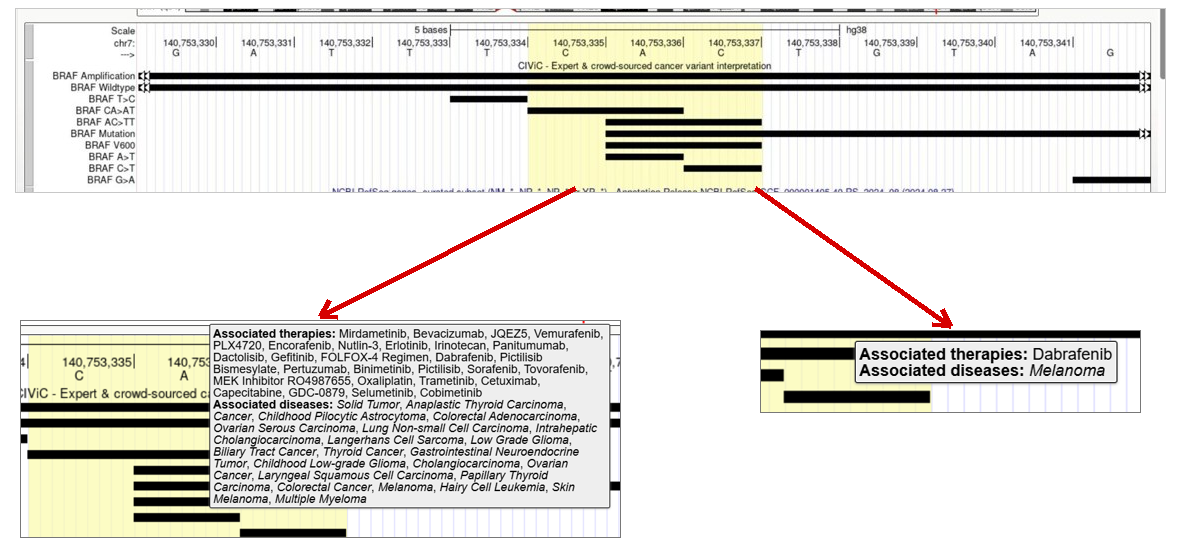
CIViC: click a feature for the details
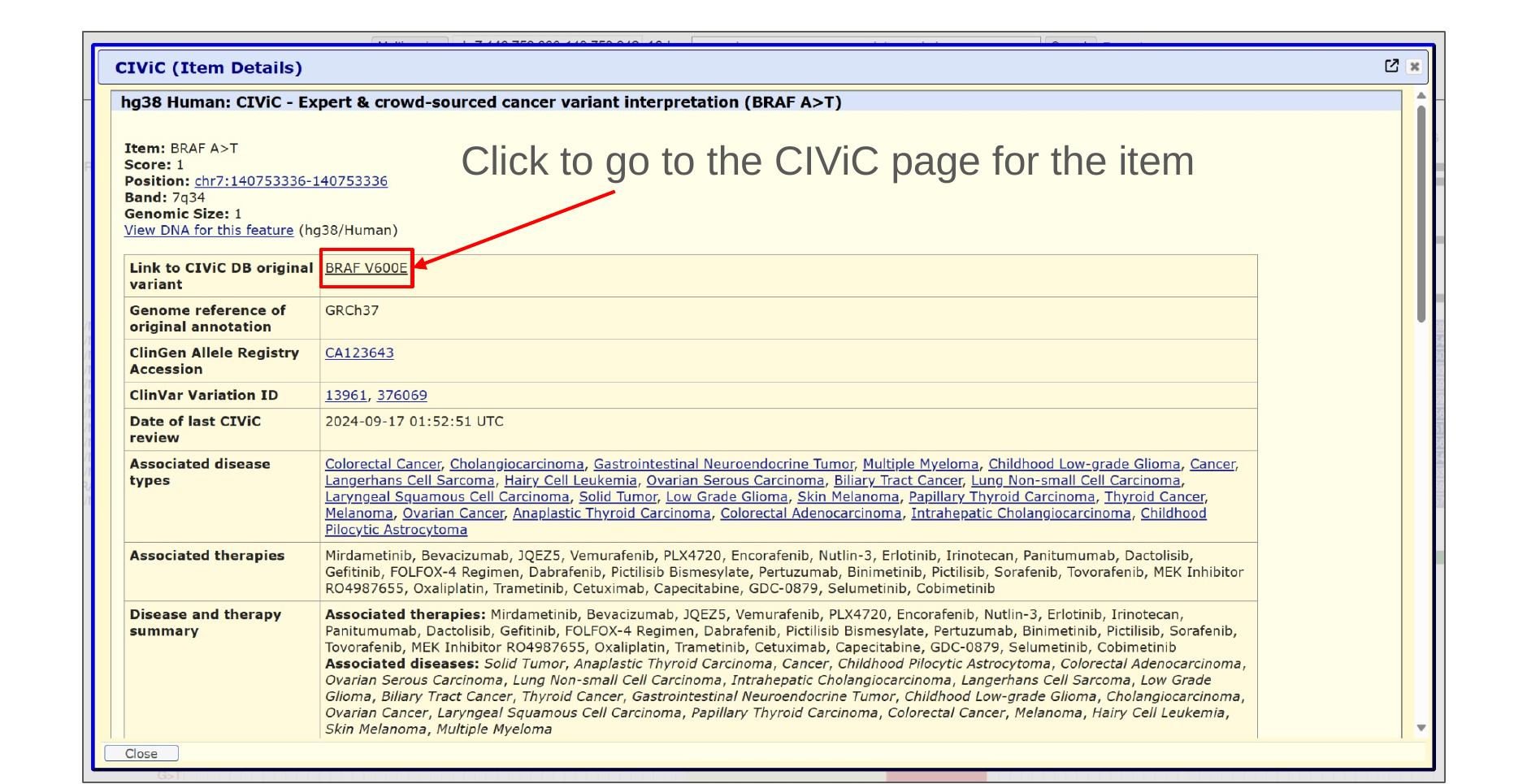
CIViC: the page for BRAF V600E
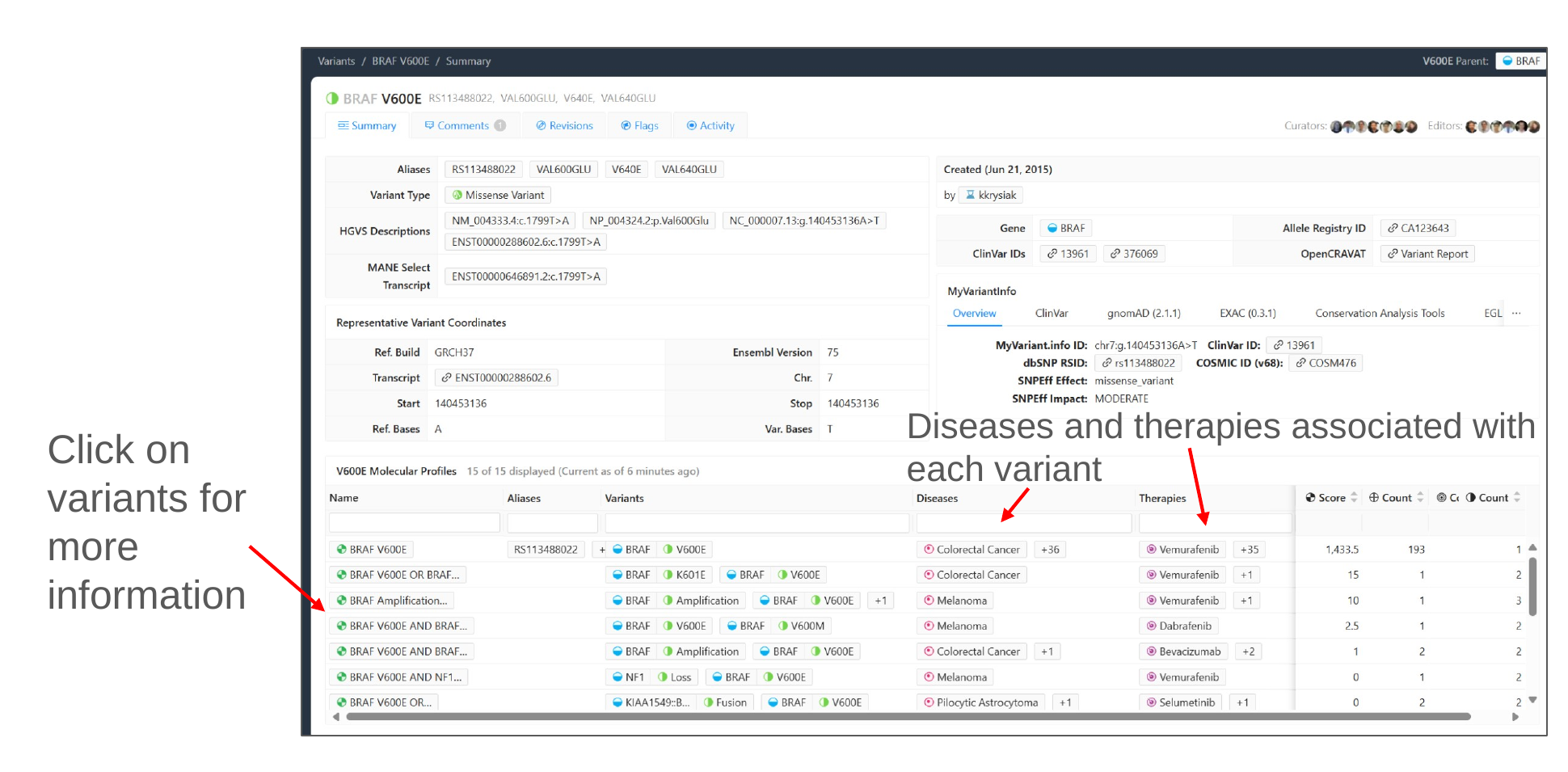
CIViC: the evidence behind each call
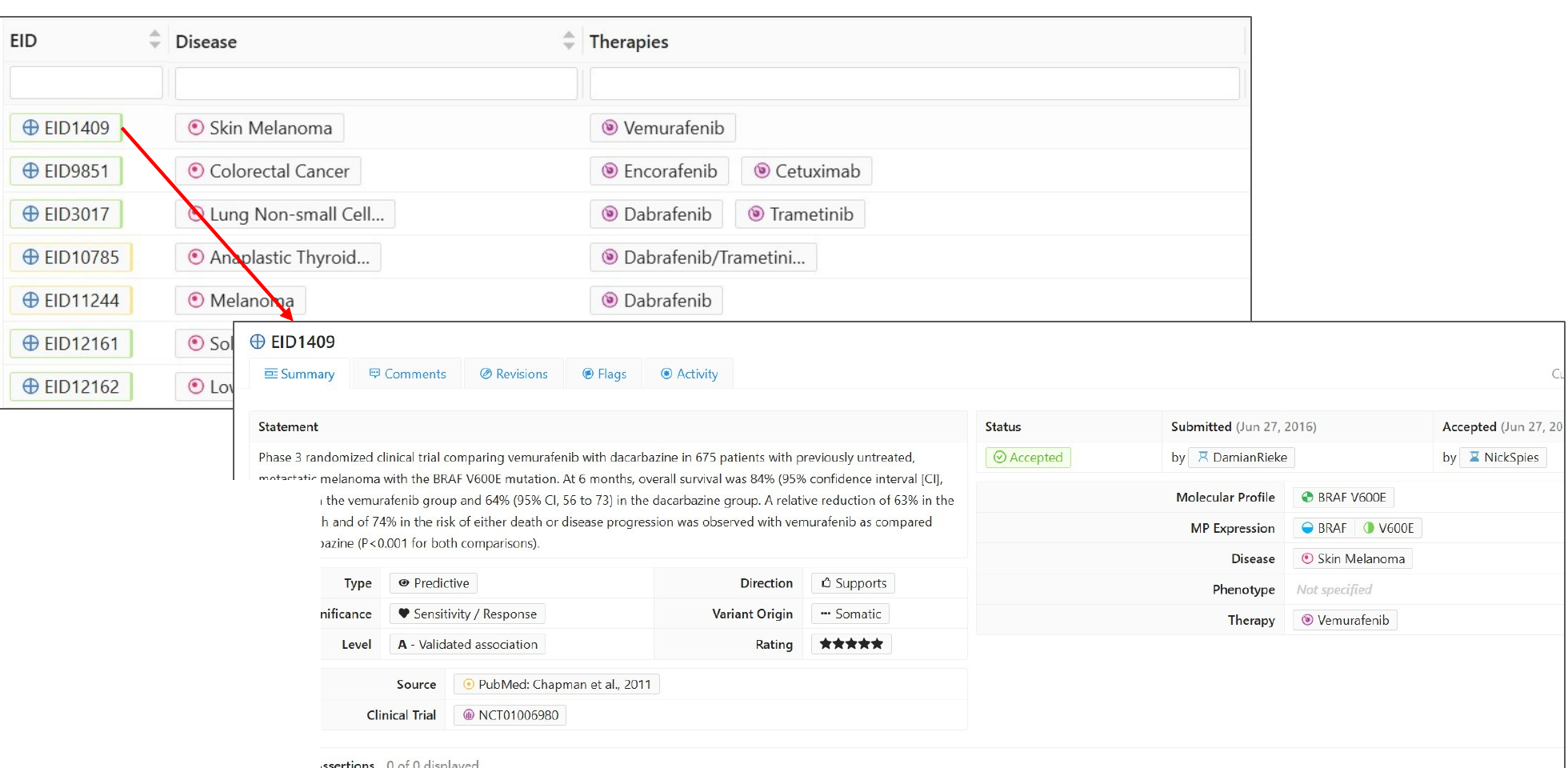
Each disease and therapy links to Evidence Items (EIDs); each EID cites the supporting publication and rates its strength: the “show me the evidence” layer behind actionability.
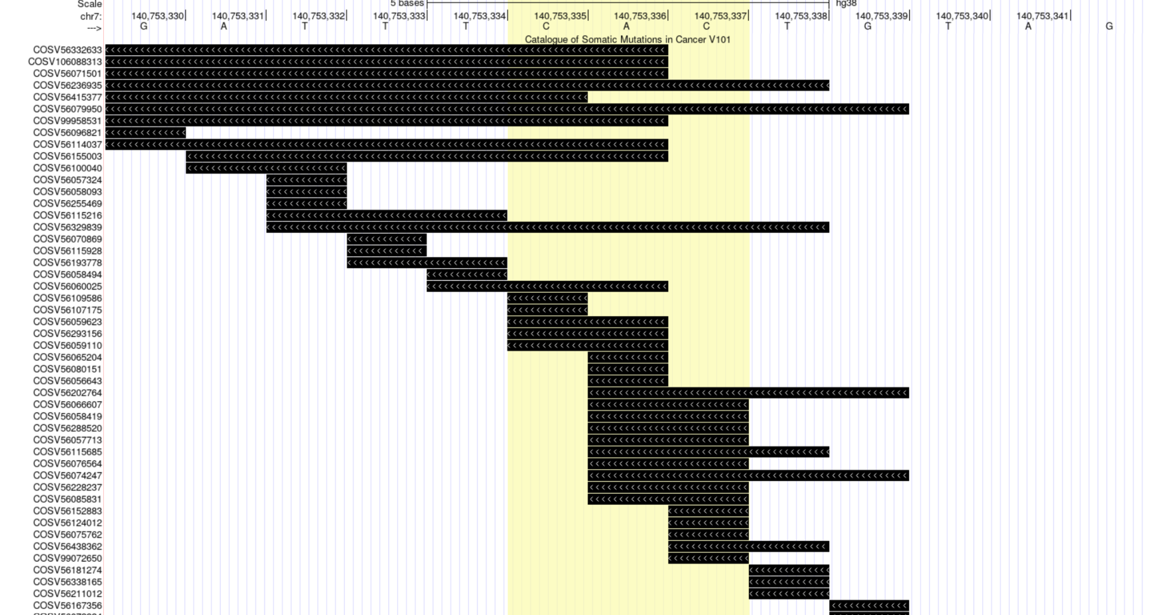
COSMIC: Catalogue of Somatic Mutations in Cancer
- The reference catalog of somatic mutations seen across tumors.
- Shows how recurrently a position is mutated, and in which cancer types.
- Best for: spotting recurrent hotspots and likely drivers.
Try it, ▶ open COSMIC at the BRAF hotspot
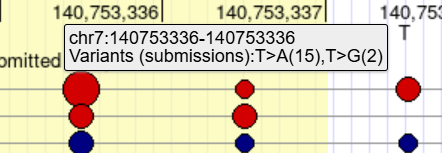
The V600 hotspot stands out by recurrence.
ClinVar: variant-disease classifications
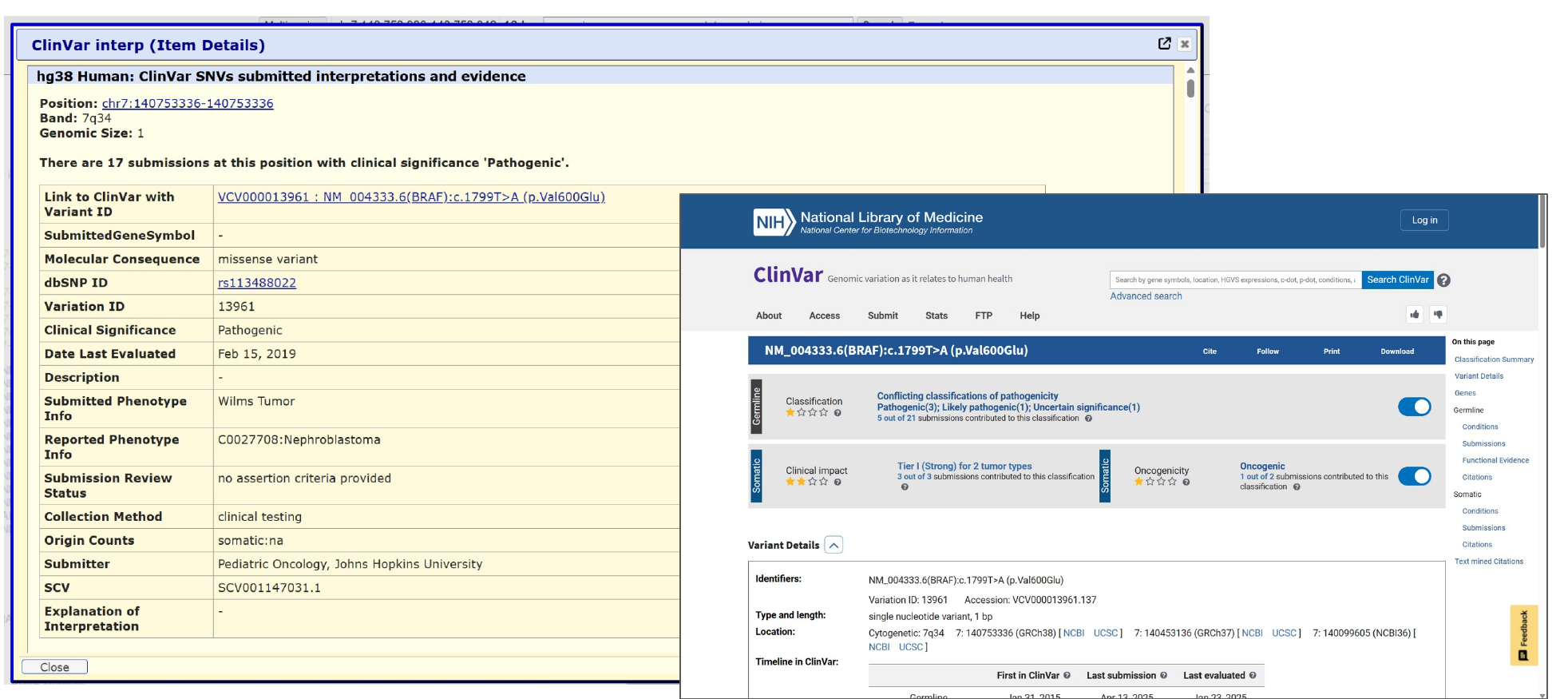
- Public archive of submitted clinical classifications, pathogenic to benign, with review status.
- Increasingly carries somatic oncogenicity and clinical-impact calls.
- Click a variant for its interpretation and submitters.
Try it, ▶ open the BRAF ClinVar interpretation track
Variants colored by clinical significance.

ClinVar database link
TCGA Pan-Cancer
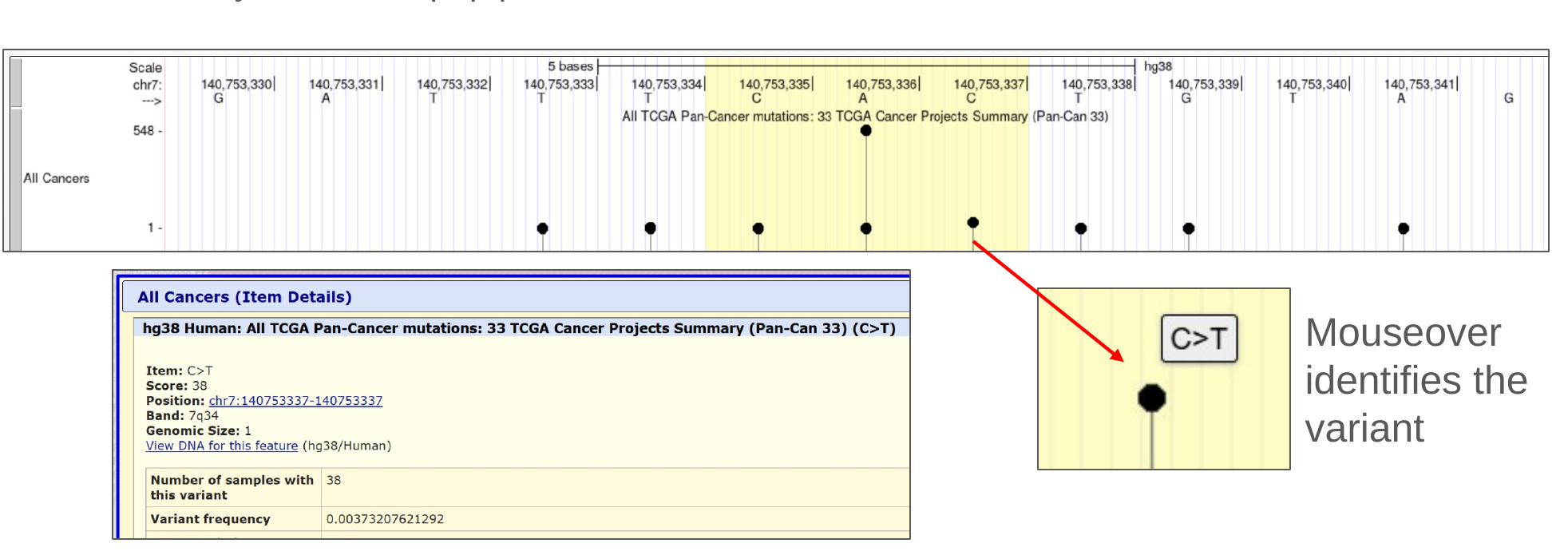
- Somatic variants across thousands of tumors and many cancer types; useful for variant frequency by cancer type.
- Drawn as a lollipop plot; mouse-over identifies the variant and its sample count.
COSMIC vs TCGA
Both show recurrence. TCGA is one uniform cohort with comparable, by-cancer-type frequencies; COSMIC is the broader aggregate catalog (bigger counts plus the driver Census), but heterogeneous.
Try it, ▶ open TCGA Pan-Cancer at BRAF
Germline diagnosis
Germline variants
inherited disease: gene-level validity and population frequency
GenCC: the Gene Curation Coalition

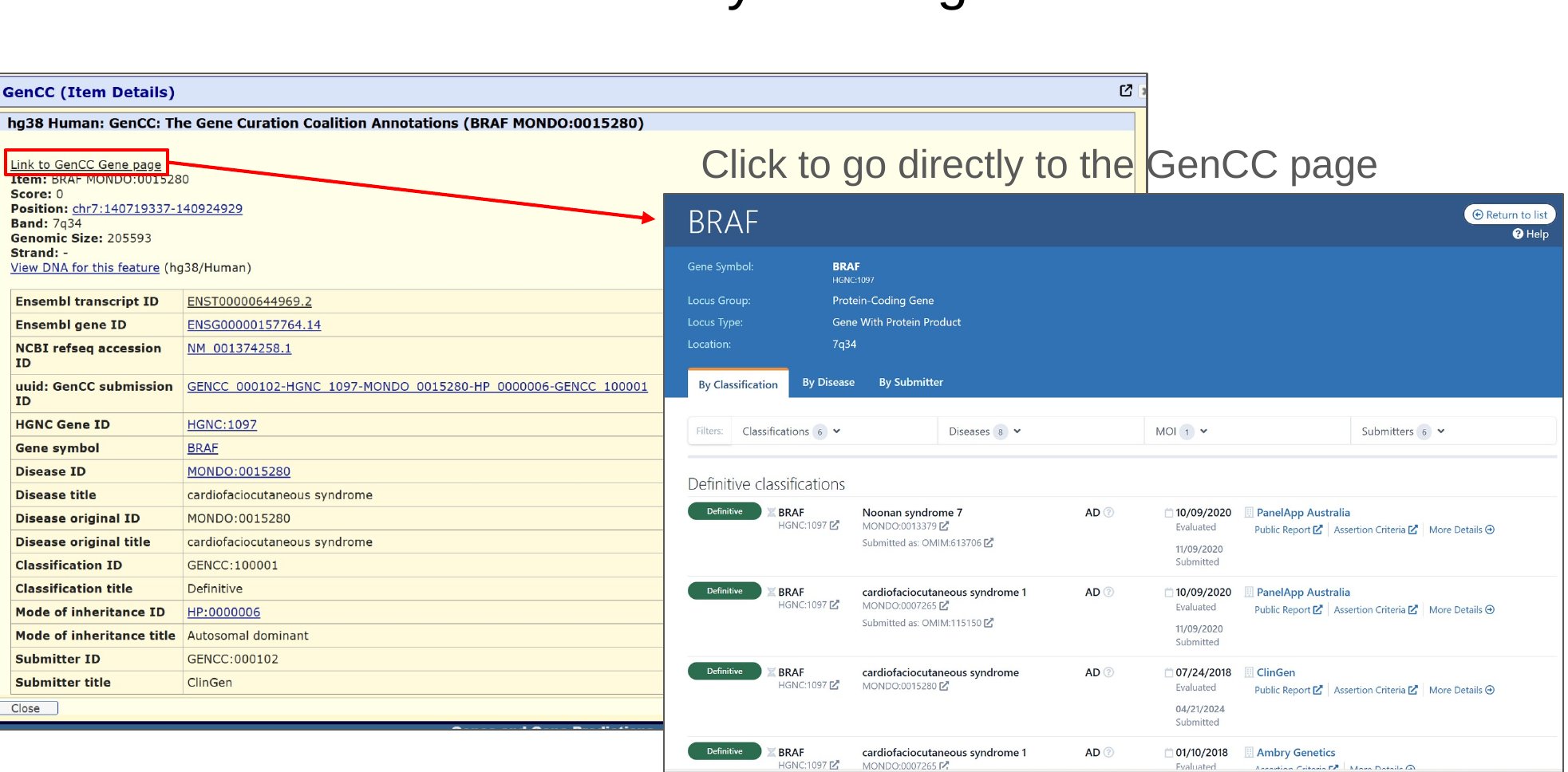
- Aggregates gene-disease validity from many expert groups.
- Germline / Mendelian focus: genes to inherited diseases, not specific variants or somatic mutations.
- Color = strength of the link (definitive, strong, moderate, limited); spans the whole gene, mouse-over for the curated detail.
Try it, ▶ open the GenCC BRAF session
The gene-disease links for BRAF, colored by evidence.
GenCC: click through to the source
OMIM: Online Mendelian Inheritance in Man
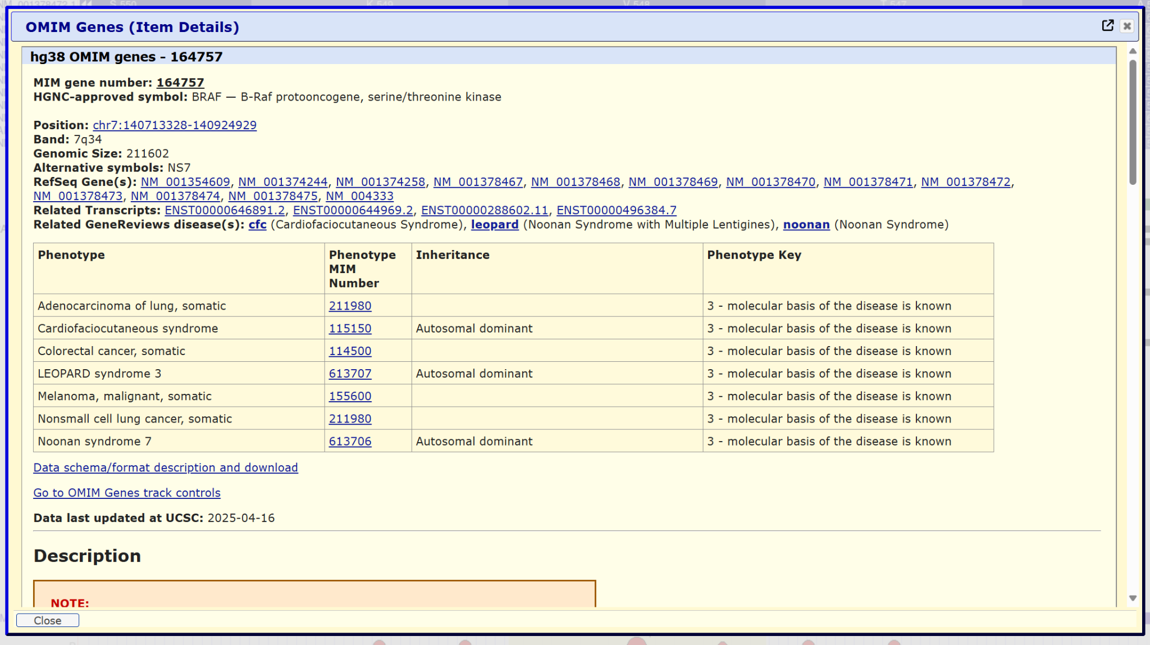
- The classic catalog of human genes and their phenotypes.
- Mostly inherited disease; well-known genes (e.g. BRAF) can list somatic phenotypes too.
- Covers whole-gene phenotype links and specific alleles.
OMIM vs GenCC
OMIM gives per-gene depth (narrative biology and specific disease alleles); GenCC gives the standardized gene-disease validity tier and is fed partly by OMIM.
Try it, ▶ open OMIM at BRAF
gnomAD: Genome Aggregation Database
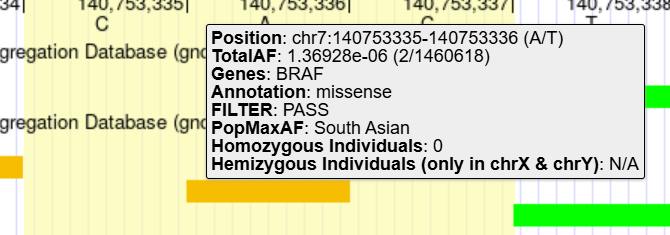
- Allele frequencies from large, broadly healthy populations (the “normal” database).
- A variant common here is most likely benign.
- In cancer, used to filter germline and common variants out of somatic calls.

Where to next
- These databases come together in Tutorial 3: Clinical Examples & Variant Interpretation, where we work full examples end to end.
- Help → Interactive Tutorials, or the docs at genome.ucsc.edu/docs.
- Email the team: genome@soe.ucsc.edu.
Thank you!
Questions? · genome@soe.ucsc.edu
UCSC Genome Browser · genome.ucsc.edu